The IA Conference '26: These are my people (and they're odd)
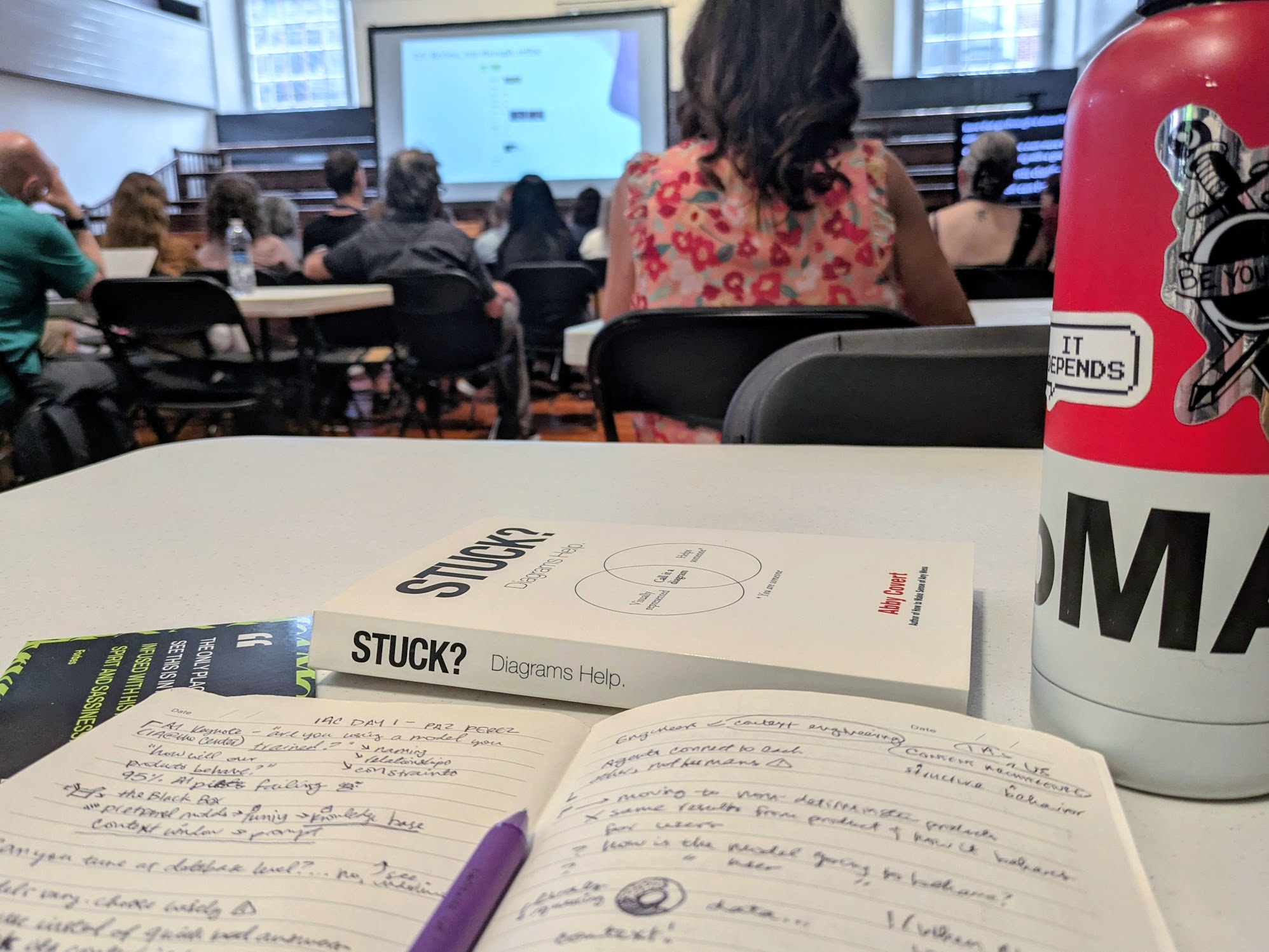
I've been home from Philadelphia for about a week now, and I'm still going through my notes from this year's Information Architecture Conference.
Here's just some of what I hope to remember.
The sessions
I could have easily celebrated something from each and every speaker. What follows are highlights across the last three days of the five-day conference.
Jennifer Briselli reframed our professional identity, no big deal. The tl;dr: our work is not architecture; it is scaffolding. She argued that our job is to create conditions for the right things to emerge through use, not to build the final structure ourselves.
Meg! Lewis, a role model of mine, closed the conference with a keynote that showed up fully. She called us to act, to reconnect with the silly little freak inside all of us, through our values, personality, abilities, perspective, and influences. And I quote: "we have enough robots. We need you — not as a smaller, safer version of yourself, but your whole vibrant, complex, playful self." I wrote pages of notes that I'm already sharing with people I trust.
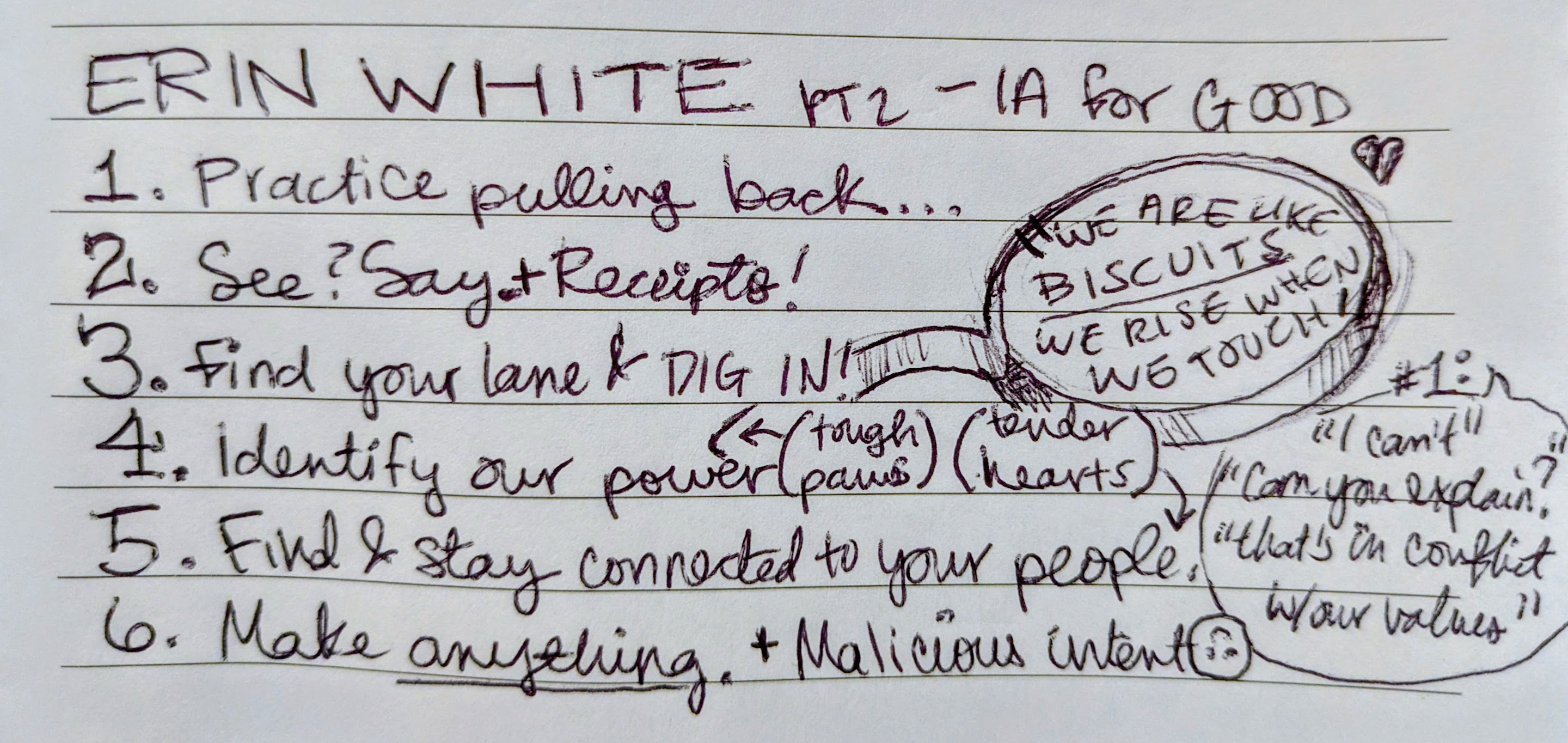
Erin White stole the room with "IA for Evil." They framed dark patterns as structural violence and moral injury. Then they lit a candle with calls to action for IA for Good. My favorite line of the event was theirs: "We are biscuits. We rise when we touch each other."
Pavel Samsonov offered some arguments and definitions I'm going to use forever. For example, "goals are what to do, principles are what not to do": has it ever been this simple in my head? I assure you, it has not. He argued around the power of tools with friction that help us think and reach better decisions, contrasting this with AI, which encourages us to bypass thinking and UX altogether.
Karen Brown made the case for why IA belongs in the executive conversation, as revenue protection, risk reduction, and competitive advantage. There were a lot of helpful frames in language that I'll be borrowing from this talk.
Dan Brown reminded the room that naming things is what we do, with a unique approach. He proposed product blueprints as a shared framework between screens, paths, data, states, and decisions. Lots to noodle on here for me personally (it dovetails nicely with something I've been working through, improving stakeholder reviews of content-models).
Joe Elmendorf gave us permission to sketch badly in front of clients. He called the shitty map a Trojan horse, because it is a disarming posture to start a conversation. "The gap between knowing and acting is smaller than you think." I've been sketching and prototyping with paper for years (watch my DrupalCon 2020 talk, “From Squiggles to Straight Lines”), but was super grateful for how Joe made the case.
Poster Night was so wonderful! I have been so encouraged by the feedback to my poster that I'm drafting this into its own post. For now, I'll say that I enjoyed many engaging conversations and workshop demonstrations. I was happy to see how many folks took my flyer or used the QR code. It was legitimately fun.
The books
I tried to not buy anything. This means I came home with only one thing — though admittedly, I did drink a semi-unreasonable amount of tea lattes throughout Old City.
I got a signed copy of Abby Covert's book, Stuck. In fact, the last copy!
I never, ever win anything. So when my name was pulled in Indi Young's book raffle, I was delighted! I already look forward to her thoughtful package of Time to Listen arriving in the mail.
On the subject of print: in a commitment to be present and avoid distractions, I handwrote my notes in a thin, soft notebook, and converted them afterwards using OCR. This let me doodle to keep focus, not chase outlets, stay off socials, and carry less.
The people
This aspect is both the hardest to capture and the most essential. Please indulge my circular way of getting there.
The jokes in presentation slides made the room erupt in laughter, but I know that not everyone would enjoy the humor of, say, Grittypus the Unsettling's visual reveal, or the generic user story of Susie Shopper. I am grateful for the way the people and their communications help me feel seen.
Even the hat-tips felt different than the tech event name-dropping I'm accustomed to. So many experts seemed to be lifting each other up, with multiple speakers altering their slides on the day of their presentation to celebrate something another speaker said. The “old-timers” don’t have the same cliques; they’re welcoming.
This year, I came in knowing a handful of people, and I left with friendships and connections I never expected. I immediately recognized another poster presenter as a professional twin. I spoke with another attendee about a personal topic in a safe space, the kind of conversation I didn't expect to have at a professional conference. I met folks I think I'll stay in touch with for a long time… people I didn't know about a week ago and now feel lucky to know.
There's a specific emotional intelligence that lives within this particular meeting house. People show up curious and willing to go somewhere real in conversation. They ask follow-up questions. They disagree thoughtfully. They share what they're actually struggling with. It's rare, and it doesn't happen by accident. It's the result of a community that has been intentionally tended.
I wrote recently about what happens when the culture of a community slips unchecked. It felt to me, a month later, like IAC was the other side of this same story.
The organizers and volunteers built something warm, rigorous, and genuinely fun. While there was plenty to do socially and across different levels, none of the parties required careful observation or calculation.
It was the kind of conference where the sessions make you think and the hallways make you feel like you belong. Where you end a night singing Bohemian Rhapsody with strangers without it feeling strange.
Pavel put it perfectly: "If this cross section is at all representative, then my hope in the industry has been restored."
I believe a lot of us left with our cups filled, even those of us who came thirsty for different things.
Parting thoughts
I was deep in thought about all of this on my travel day home. Here's a parallel I photographed at the 30th Street train station: layers and layers of scaffolding supporting a useful but historical structure.
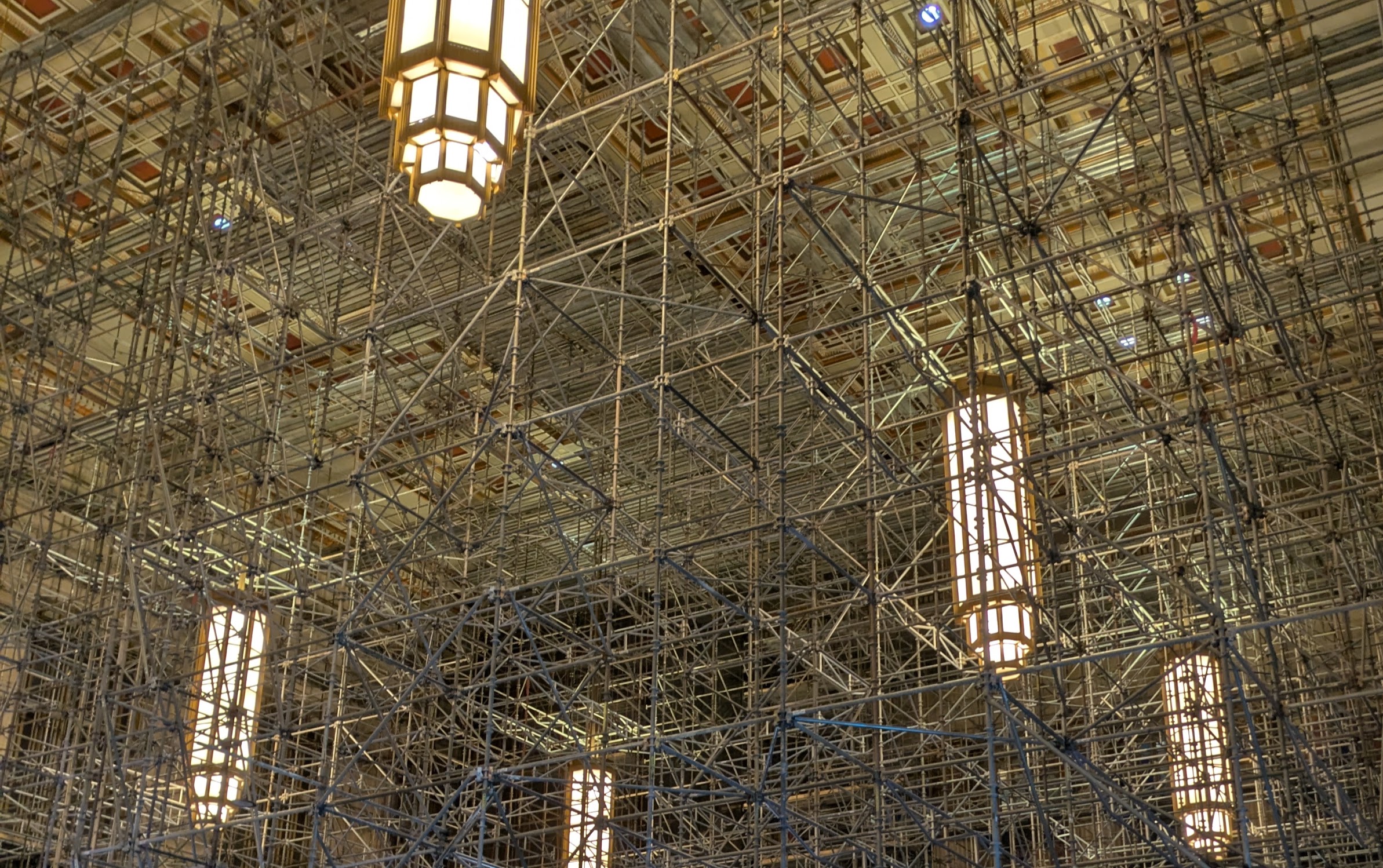
It reminded me of how to frame my work, but also of the work still to be done.
I'm already thinking about IAC 2027 — not just attending. If you've been on the fence about getting involved, the people who run this thing are worth showing up for. I want to give back to this community, whether that's submitting a session, volunteering my time, or both.
I will definitely see y'all next year. 👋